
The Willy Wonka Immersive Experience & the Dark Side of AI
How to identify AI generated content

Note: This Article was not written using any Artificial Intelligence revision.
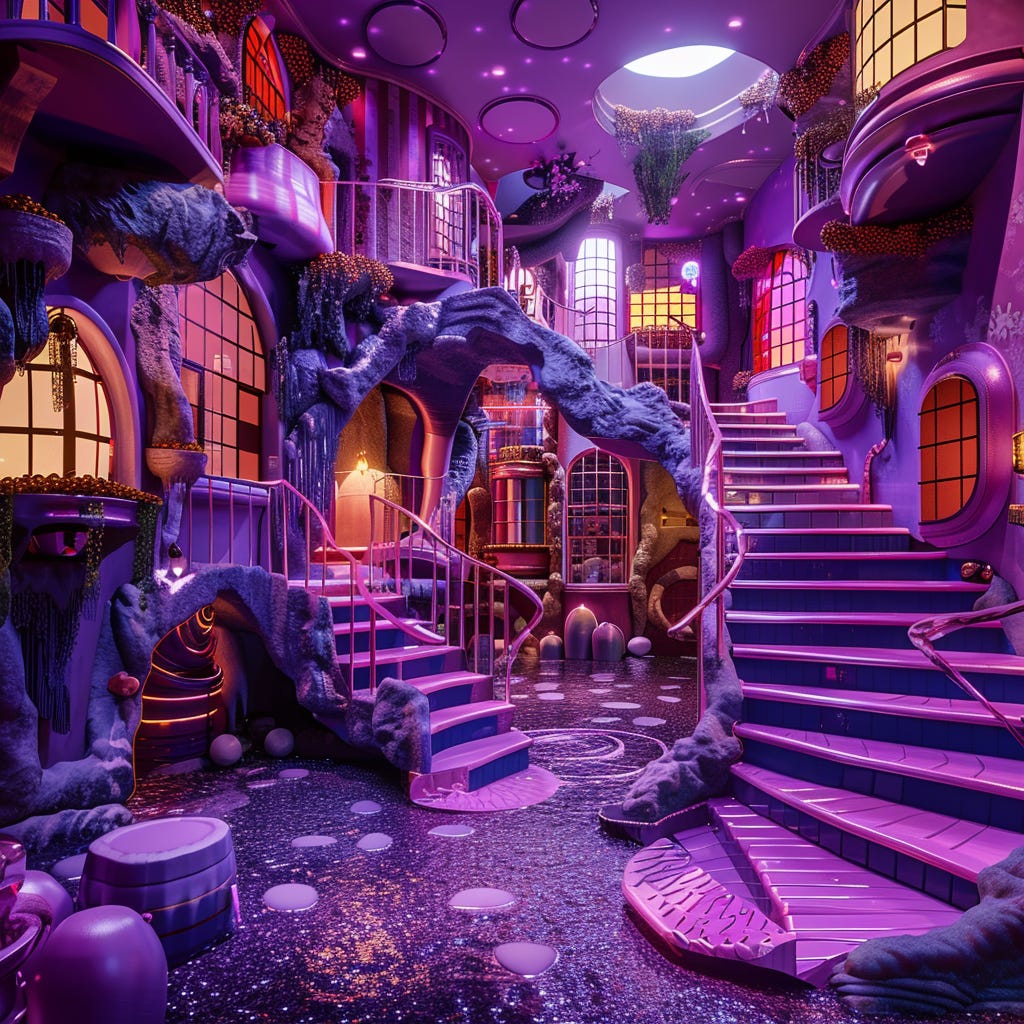
My Version of Willy Wonka with AI
When utilizing Artificial Intelligence in day to day work, it makes it a bit easier to identify which content has been Artificially generated using Chat GPT, Open AI’s artificial general intelligence, compared to content created from a human. Glasgow’s Willy Wonka Immersive Experience is a prime example of this.
If you’ve seen the news lately, there was an “Immersive Experience” at the catastrophic level of the Fyre Festival. Here, we’ll deep dive into the marketing appearance that was generated via AI, and the reality of the experience.
The experience cost around 50 USD per participant, however the experience didn’t serve expectations because
WHAT WAS PROMISED / WHAT WAS DELIVERED:
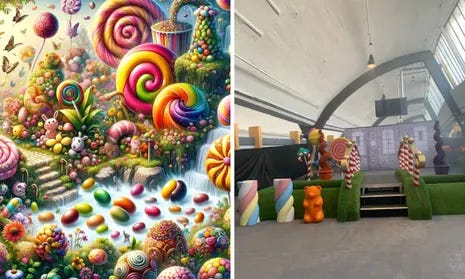
Source: The Guardian
As you can see there’s a clear difference in the marketing and the reality. The left is an Dall-E image generated, and the right is the actual physical design. No difference right?
Upon doing some slight research, it seems everything was AI generated, from the scripts the actors used, to the digital marketing, to the website copy. All the images on the site were AI generated, never presenting a reality of their experiences. Now, if someone who doesn’t use AI day to day, there’s an inability to comprehend AI content from human content because it’s already advanced so quickly, that it’s blurring the lines.
How to identify AI generated images:
Recently, I’ve joined a “Beautiful Italy” facebook group that essentially share beautiful images photographers have taken around Italy, however most of the content being posted is now AI generated.

AI generated image found on “Lovely Italy” Facebook Page.
But how can you tell this image is AI generated? Well, it lies in the tone of the image. This specific image is too soft, and one key is to look at the plants, because if the render isn’t a super strong export, the AI will take short cuts on the plants and how realistic they appear.
Also look for errors in the image, sometimes AI tends to leave out matching elements (ie. only one door, when there should be two.)
The thing that always surprises me, is how quickly people assume the image is real. These accounts are filled with comments saying “I love Lake Como”, “Where is this place?” “Can I make a reservation there?”
But what if these artificial images turned into Faux-Hotel bookings, which dangerously impact tourism sectors, experiential sectors, and even the dining sector. This is a conversation we should be having at a global level.
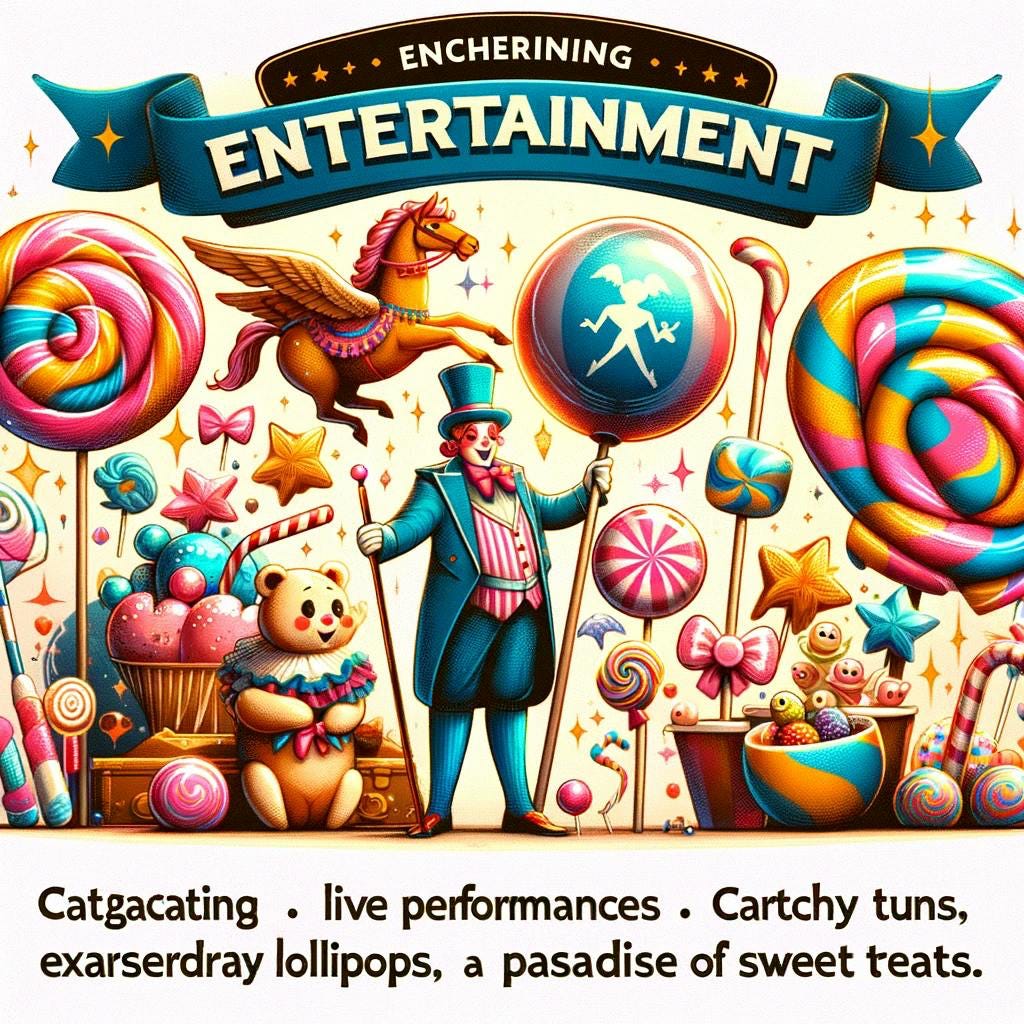
I’m honestly surprised the creators behind Willy Wonka Immersive opted to use Dall-E versus Mid Journey 6 because Midjourney captures a more hyperreal image. Also, image generative AI have trouble generating written text in the image, so you’ll get miss-spelled words, which should be an obvious sign that the image was AI generated. I’m surprised the Wonka creators didn’t replace the text with copy generated from ChatGPT…
How do you identify copy that was created in ChatGPT?
I actually find identifying copy created with Open AI to be more obvious, ChatGPt 4 uses a lot of repetitive words in generation process, it tends to sound a bit more academic then natural, unless you program a GPT with a specific tone. But even then, the level of editing I usually have to do from a GPT script sometimes can equal the same time if I wrote the copy myself. GPT often uses a structure that uses alliteration, it can be too formulaic (strong introduction and conclusion), and generally robotic.
I say let this be a tale for creatives, experiential creatives, and marketers of how not to use AI. I believe it is a powerful tool in a conceptual phase of an experience or a piece of media. However, there’s a moment when the AI should be set aside, and let the intuitive creative power that exists within you to steer the ship.